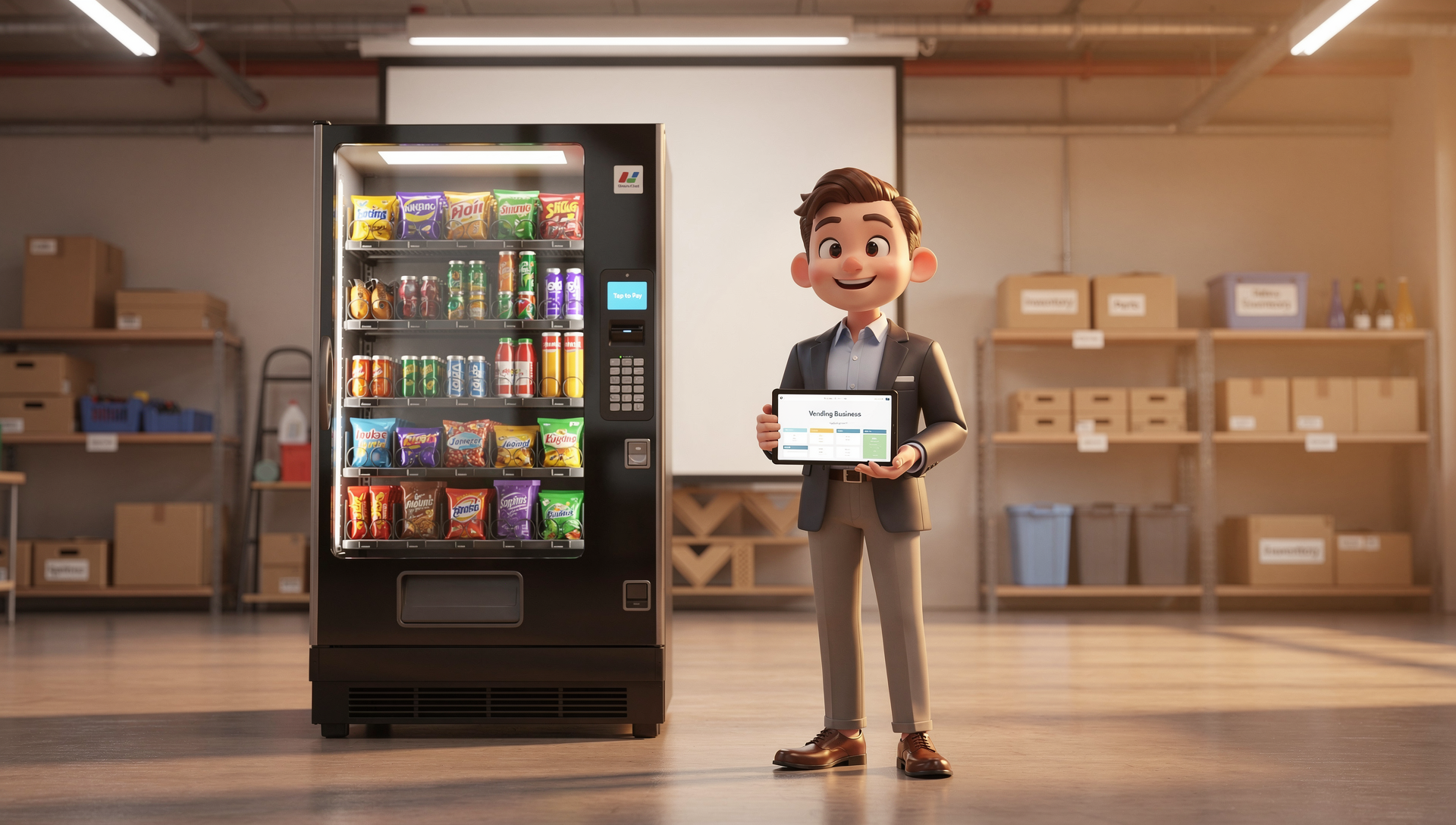
Starting a vending machine business in 2026 is one of the most practical ways to build recurring income with relatively low startup costs. With modern card readers, remote monitoring, and better data, today’s vending operators can run lean, smart, and profitably.
This step-by-step guide walks you through exactly how to start a vending machine business the right way, while avoiding the mistakes that cost new operators time, money, and locations.
Step 1: Learn How the Vending Business Works in 2026
At its core, vending is simple. You place machines in high-traffic locations, stock products people want, and service those machines consistently.
What makes vending different in 2026 is technology.
Modern machines allow you to:
- Accept card, tap-to-pay, and mobile wallets
- Track sales remotely
- Monitor inventory in real time
- Adjust pricing instantly
Profit comes down to three factors:
- Location quality
- Product selection
- Operational consistency

Step 2: Choose the Right Type of Vending Machine
Not all vending machines are created equal, and buying the wrong machine is one of the fastest ways to stall out.
Popular vending options in 2026 include:
- Snack and drink combo machines
- Beverage-only machines
- Healthy vending machines
- Micro markets
- Specialty machines like coffee or frozen food
For beginners, snack and drink machines remain the easiest to manage and scale.
Focus on reliability, card reader compatibility, and ease of service over flashy features.
Step 3: Set a Realistic Startup Budget
A vending business does not require massive capital, but you do need to plan correctly.
Typical startup costs include:
- Machine purchase
- Card reader and software fees
- Initial inventory
- Transportation or vehicle use
- Insurance and business setup
In 2026, a realistic budget is $2,500 to $6,000 per machine, depending on whether equipment is new or used.
Starting with one machine is not only acceptable, it is smart.
Step 4: Get Your Business Registered and Compliant
This is where many new operators get stuck or skip steps.
Before placing machines, you need to make sure your business is legal and compliant. Requirements vary by state and sometimes by city.
At a minimum, you may need:
- Business registration
- Sales tax permit
- Vending or machine license
- Health department permit
- Liability insurance
Missing even one requirement can lead to fines or forced machine removal.
To avoid guessing, many operators use a compliance guide that breaks down state-by-state licensing, sales tax, and health requirements in one place.
👉 Vending Compliance: State-by-State Licensing & Legal Requirements (Digital Download)
This guide walks you through exactly what is required in all 50 states so you can get compliant and scale confidently without costly mistakes.

Step 5: Find Profitable Vending Machine Locations
Locations matter more than machines.
In 2026, the most consistent locations include:
- Manufacturing plants
- Warehouses
- Auto repair shops
- Medical offices
- Large office buildings
When evaluating a location, focus on:
- Employee count
- Breakroom usage
- Existing vending options
- Management openness
Cold calling, walk-ins, and referrals remain the most effective methods.

Step 6: Present Yourself Professionally When Pitching Locations
First impressions matter.
Many locations say no simply because the operator looks unprepared or unprofessional.
Having a clean, professional proposal instantly separates you from hobby operators.
A solid vending proposal should explain:
- Who you are
- What machines you provide
- Service frequency
- Payment options
- Benefits to the location
👉 Vending Machine Business Proposal Template (Digital Download)
This editable proposal template helps you present your vending business professionally and secure placements faster, whether you are starting with one machine or scaling.
Step 7: Use a Vending Machine Placement Agreement
You do not always need a long contract, but having a written agreement protects both sides.
A simple vending placement agreement should cover:
- Permission to place equipment
- Service expectations
- Commission terms if applicable
- Removal conditions
Written agreements reduce misunderstandings and show professionalism.
👉 Vending Machine Placement Contract Template (Digital Download)
This customizable agreement helps protect your business, establish clear expectations, and secure locations with confidence.

Step 8: Stock Profitable Products and Price Correctly
What you stock determines your success.
Top-selling items in 2026 still include:
- Chips and candy
- Energy drinks
- Bottled water
- Protein bars
Use your card reader dashboard to track sales and remove slow sellers.
Pricing should cover:
- Product cost
- Card processing fees
- Commission if paid
- Profit margin
Data-driven decisions beat guessing every time.

Step 9: Service Consistently and Track Performance
Consistency is what turns a vending side hustle into a real business.
Successful operators:
- Service machines on a schedule
- Clean machines every visit
- Review sales weekly
- Replace underperforming products
Remote monitoring allows you to grow without wasting time.
Step 10: Reinvest and Scale at the Right Pace
Once your first machine is profitable, reinvest earnings into growth.
Smart scaling looks like:
- Adding one machine at a time
- Upgrading locations
- Improving route efficiency
One strong location is better than three weak ones.
Final Thoughts
Starting a vending machine business in 2026 is not about passive income hype. It is about running a professional operation with systems, compliance, and consistency.
When you:
- Follow legal requirements
- Present yourself professionally
- Use written agreements
- Track your numbers
You dramatically increase your chances of long-term success.
Start small. Do it right. Scale with confidence.


