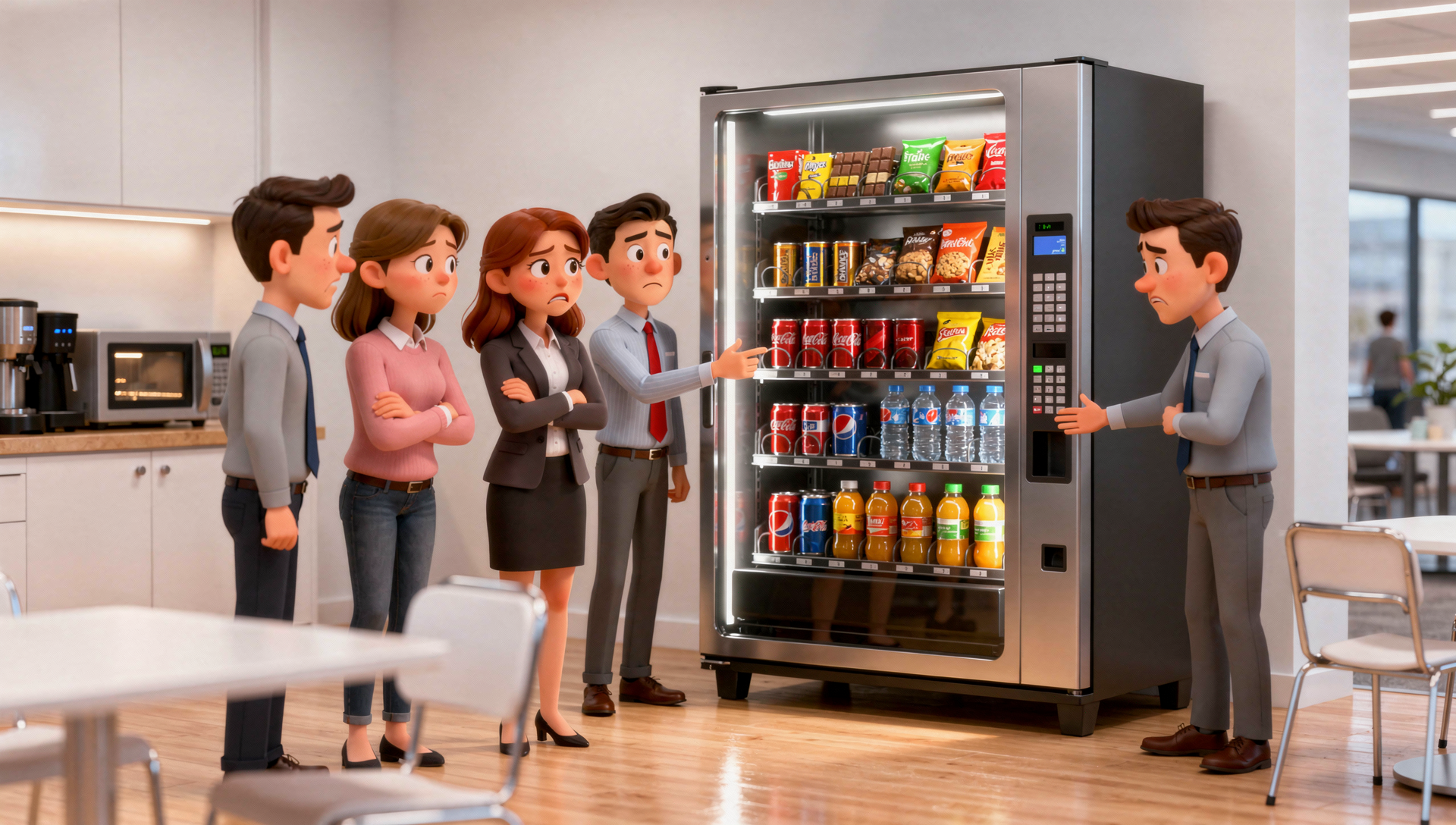
If your vending machines are not making the money you expected, chances are the problem is not the machine, the location, or even the foot traffic. Most of the time, it comes down to one simple thing: what you are putting inside the machine.
I see this all the time. New operators get excited, buy machines, land a decent location, then stock the machine with snacks and drinks they personally like. A few weeks later, sales are slow and frustration sets in.
Here is the hard truth I had to learn early on.
Your vending machine does not care what you like. It only cares what sells.
Product mix controls revenue more than almost anything else in this business.
Why Stocking What You Like Can Kill Your Profits

When I first started, I stocked machines with things I personally ate all the time. Certain chips, certain candy bars, and drinks I thought were popular. I figured if I liked them, everyone else probably did too.
That was wrong.
What I learned fast was that different locations have very different buying habits. What sells in a warehouse will not always sell in a medical office. What moves fast in a school or gym will probably sit in an apartment laundry room.
Your customers are voting with their dollars every single day. If you are not listening to that vote, you are leaving money in the machine.
Demographics Decide What Belongs in the Machine

Before you pick products, you need to understand who is actually using the machine.
Here are a few examples:
- Office environments:
Coffee drinks, energy drinks, chocolate, baked snacks, and quick lunches do well. - Warehouses and factories:
Larger snacks, salty items, energy drinks, and higher calorie foods usually sell better. - Gyms and fitness centers:
Protein bars, water, low sugar drinks, and healthier snack options move faster. - Schools and youth centers:
Price sensitivity matters more, and certain items may be restricted.
Every location tells you what it needs. You just have to pay attention.
One of my locations taught me this lesson the hard way. It was in a blue-collar shop with long shifts. I had stocked lighter snacks and bottled teas. Sales were terrible. Once I switched to bigger chips, candy, and higher energy drinks, revenue jumped within two service cycles.
Same machine. Same location. Completely different results just from product selection.
Pricing Must Match the Location, Not Your Cost Spreadsheet

ou do not need fancy software to track performance. You just need basic awareness.
Here is what I always pay attention to:
- What sells out first
- What never seems to move
- What expires before it sells
Your fastest sellers deserve more shelf space. Your slow movers deserve less or none at all.
One simple method I use:
- Introduce one or two new products at a time
- Give them two to three service cycles
- If they do not perform, replace them
This keeps your machine evolving without turning it into a science experiment every visit.
Rotate Slow Products Before They Cost You Money

Expired product is not just lost sales. It is lost inventory and lost profit.
If something is not selling, do not let it sit until it expires. Pull it, move it to another location if possible, or stop buying it altogether.
I learned early that hoping a slow product will suddenly start selling is usually wishful thinking. Machines reward action, not patience.
Seasonal Changes Matter More Than Most People Think

Buying habits change with the weather, holidays, and even work schedules.
Some patterns I see every year:
- Cold drinks sell more in summer
- Comfort snacks sell more in winter
- Energy drinks spike during busy work seasons
- Certain candy sells better around holidays
If you stock the same mix year-round, you are missing opportunities.
Small seasonal tweaks can create noticeable bumps in revenue without adding any extra machines.
Why Small Adjustments Beat Full Product Resets

Why Small Adjustments Beat Full Product Resets
Some operators completely reset their machine when sales dip. They change everything at once and hope for a miracle.
The problem with that approach is you never know what actually fixed the issue.
Instead, think like this:
- Change a few items
- Watch results
- Keep what works
- Replace what does not
This method turns your machine into a constantly improving sales tool instead of a guessing game.
Over time, each machine develops its own personality. The product mix becomes tailored to that exact group of customers.
That is how you build consistent routes, not just lucky machines.
A Simple Product Testing Method You Can Use Right Away

Here is a practical system you can use without spreadsheets or software.
Step 1: Identify two slow sellers
Anything that is not moving much.
Step 2: Replace them with two new products
Preferably something that sells well in similar locations.
Step 3: Give it two to three service cycles
Do not judge after one visit unless it completely bombs.
Step 4: Compare results
If it sells faster than what it replaced, it stays.
If not, it gets swapped again.
Repeat this process over time and your machine will naturally evolve into a high-performing setup.
No guessing. Just data from real customers.
Final Thoughts: Product Mix Is Where Profit Is Made
Low sales are rarely random. Most of the time, they are the result of stocking the wrong products for the wrong people at the wrong price.
Machines do not fail because they are old.
They fail because they are not adapted to their environment.
Once you start treating product selection as a business strategy instead of a refill task, everything changes. Revenue improves. Wasted inventory drops. And you stop blaming locations that are actually full of opportunity.
From my experience running routes with Big City Vending, the operators who win long term are not the ones with the fanciest machines. They are the ones who listen to what their machines are telling them and adjust accordingly.
Your customers are already telling you what they want.
Your job is simply to give it to them.


