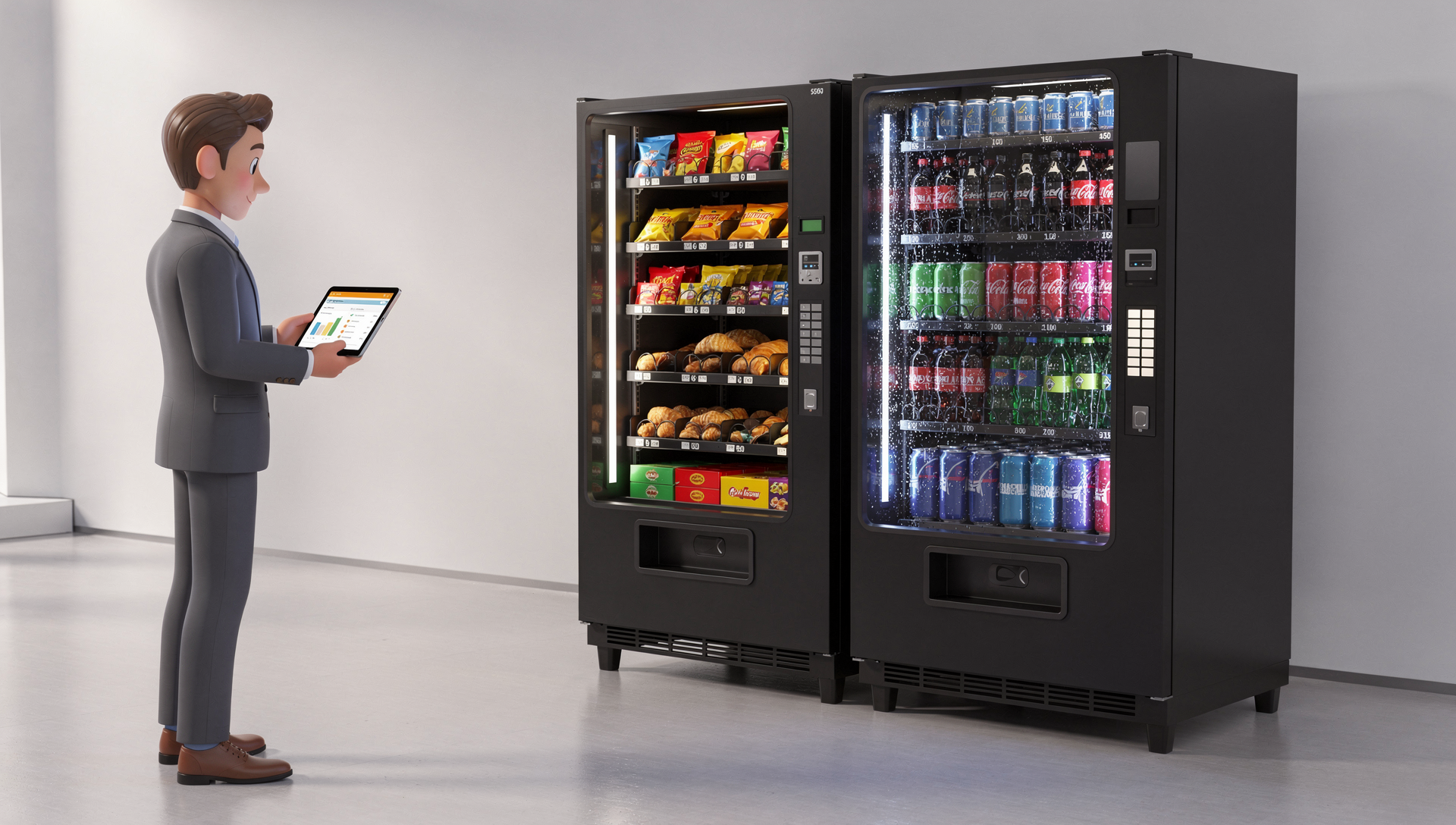
If you’re looking for a business you can start without a storefront, without employees, and without being tied to one place all day, vending machines are still one of the most practical opportunities going into 2026.
I’m not speaking from theory. I operate machines, secure locations, deal with decision-makers, and track what actually sells. This business is simple on the surface, but the people who treat it like a real operation are the ones who build something that lasts.
The appeal is straightforward:
- Low overhead compared to traditional businesses
- Semi-passive income once systems are in place
- Scalable by adding more machines and locations
This is a real step-by-step guide based on what actually works in the field.

Why the Vending Machine Business Still Works in 2026
A lot of people assume vending is outdated. In reality, it has evolved.
Modern machines from brands like Crane National Vendors and AMS Vendors now come equipped with technology that makes running your route more efficient and more profitable.
Cashless Payments Drive Sales
Card readers like Nayax and Cantaloupe have changed the game. Most customers now expect to tap their phone or card.
Remote Monitoring
You can track:
- Inventory levels
- Best-selling products
- Machine performance
This removes guesswork and helps you make smarter decisions.
Built-In Demand
People will always want convenience. Whether it’s a Coca-Cola or a Doritos, the demand is already there. Your job is to place machines where people already are.

Step 1: Choose Your Vending Machine Type
Before you buy anything, decide what type of machines you want to operate.
Snack Machines
Stock items like Lay’s, Snickers, and Reese’s.
Pros:
- High margins
- Wide variety
- Easy to restock
Cons:
- Slower turnover in some locations
- Requires testing to find winners
Drink Machines
Carry brands like Pepsi, Mountain Dew, and Gatorade.
Pros:
- High demand
- Fast-moving inventory
- Simple product selection
Cons:
- Heavy to move
- Lower margins than snacks
Combo Machines
Combo machines from manufacturers like Seaga combine snacks and drinks into one unit.
Pros:
- Great for smaller locations
- Space-saving
- Easier placement
Cons:
- Limited capacity
- One issue affects the whole machine
Specialty Machines
This includes:
- Healthy vending
- Micro markets
- AI smart coolers
Platforms like 365 Retail Markets and CoolerX are becoming more popular.
Real-world insight:
Start simple. Specialty machines can be very profitable, but they require stronger locations and more experience.

Step 2: Find Profitable Locations
Location is everything in this business.
You can have the best machine and best products, but if the location is weak, sales will reflect that.
What Makes a Strong Location
Look for:
- Consistent foot traffic
- Limited nearby food options
- People staying on-site for long periods
Proven Location Types
From experience, these perform well:
- Warehouses and distribution centers
- Apartment complexes
- Office buildings
- Auto dealerships
- Manufacturing plants
What to Avoid
- Low-traffic businesses
- Locations offering free snacks
- Places with inconsistent hours
How to Approach Businesses
Keep it simple and direct:
- Offer convenience
- Emphasize no cost to them
- Highlight reliability
Most decision-makers care about making life easier for their staff.
Step 3: Secure the Location
Once interest is there, you need to close the deal.
Free Placement vs Commission
Free Placement
- You keep all profits
- Common for smaller locations
Commission-Based
- Typically 5 to 15 percent
- Used for high-traffic accounts
What Businesses Expect
They want:
- Clean machines
- Reliable service
- Quick response if issues come up
Closing Tips
- Show photos of your machines
- Explain your service schedule
- Follow up consistently
A lot of deals are won simply because you followed up and someone else didn’t.

Step 4: Buy the Right Equipment
This is where many beginners overspend or buy the wrong machines.
New vs Used
Used Machines
- Lower cost
- Ideal for starting out
- Make sure they are refurbished or tested
New Machines
- Higher cost
- Better reliability
- Often include warranties
Brands like Dixie Narco and Royal Vendors are known for durable drink machines.
Must-Have: Card Readers
If your machine doesn’t accept cards, you are losing sales.
Systems like Nayax are industry standard.
Reliability Is Everything
Every time your machine is down:
- You lose revenue
- You lose trust
Spend wisely upfront to avoid bigger problems later.
Step 5: Stock Your Machines the Right Way
This is where the real learning begins.
Start with Proven Products
Stock items like:
- Kit Kat
- Cheetos
- Red Bull
- Dasani
Expect Trial and Error
Some products will sell out immediately. Others won’t move at all.
That’s part of the process.
Use Data to Adjust
Your card reader system will show:
- Top sellers
- Slow movers
Over time, your machine should be filled with products that consistently perform.

Step 6: Set Your Pricing Strategy
Pricing affects both your sales and your profit.
Adjust by Location
- Blue-collar environments tend to be price sensitive
- Office settings allow slightly higher pricing
- Premium locations can support higher margins
Stay Competitive
Compare pricing with:
- Nearby gas stations
- Convenience stores
Focus on Profit
Even a small price increase across multiple machines can significantly increase your monthly income.
Step 7: Maintain and Scale Your Route
Consistency is what turns this into a real business.
Service Schedule
- High traffic: 1 to 2 times per week
- Lower traffic: every 2 to 3 weeks
Presentation Matters
A clean, stocked machine sells more.
Scaling Up
Once you have profitable machines:
- Reinvest into more equipment
- Add new locations
- Build efficient routes
This is how you grow from one machine to a full operation.

Realistic Startup Costs (2026 Breakdown)
Let’s keep this real.
Estimated Costs
- Used machine: $1,500 to $4,000
- New machine: $4,000 to $8,000+
- Card reader: $200 to $500
- Inventory: $300 to $800
Typical Starting Range
Most people realistically start between:
- $2,500 and $7,000
Start with one machine, learn the business, then scale.
Common Mistakes to Avoid
Bad Locations
Even a great machine won’t perform in the wrong place.
Overpaying for Equipment
Do your research before buying.
Ignoring Data
Your sales data tells you everything you need to know.
Not Following Up
Opportunities are often won through persistence.
Final Thoughts
Starting a vending machine business in 2026 is still one of the most practical ways to build income without taking on massive risk.
But it requires:
- Consistency
- Smart decision-making
- Focus on good locations
If you stay disciplined and treat this like a real business, it can grow faster than most people expect.
And once you learn how to secure locations and optimize machines, that’s when things start to scale.


