Location Acquisition Series, Part 3
The parking lot is packed. People are walking in and out. The manager says, “We get a ton of traffic.”
Sounds promising, right?
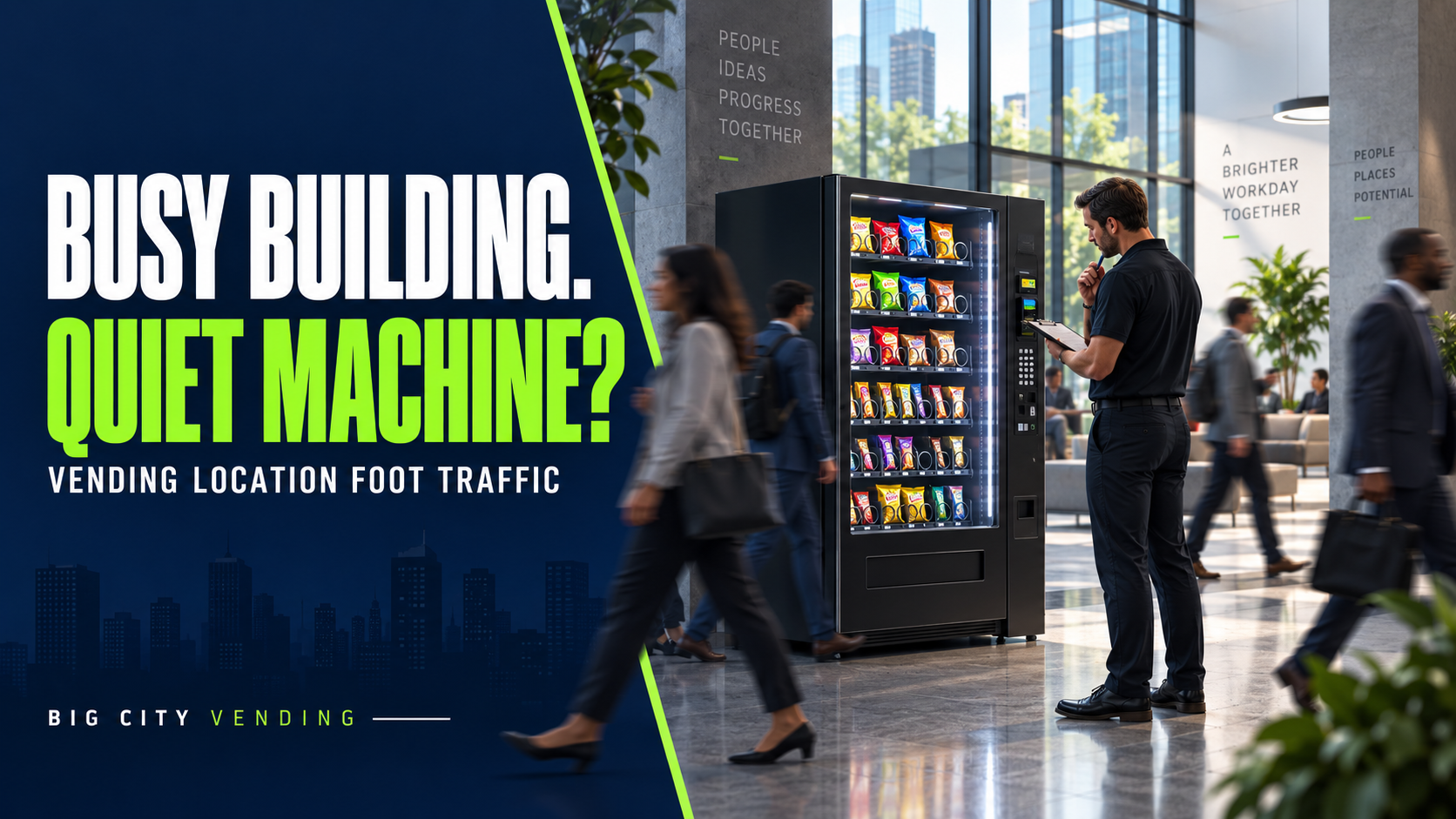
Maybe. But a busy building can still be home to a very quiet vending machine. Before you buy equipment or agree to a placement, evaluate vending foot traffic by looking at who passes the actual machine spot, when they pass it, and whether buying a snack fits into their day.
A person rushing to their car and an employee settling into a 15-minute break are two very different opportunities. Your machine cannot sell a bag of chips to a parking space.
In Part 2, I covered the vending locations I would consider next. Now let’s take the next step: figuring out whether a specific building deserves a closer look.
Foot traffic vs. buying opportunity: know the difference
Foot traffic is movement. Buying opportunity adds a few important ingredients: the person can see the machine, reach it, use it, and has a reason to purchase.
That distinction matters whether you operate in Cincinnati, Northern Kentucky, or another market entirely. A building’s total visitor count is a starting point. It is not a sales forecast.

Think about these two situations:
- A busy lobby: visitors walk straight from the entrance to an appointment, then leave. The machine sits around a corner.
- A smaller breakroom: employees return every workday, take breaks nearby, and can easily see the available snacks and drinks.
The breakroom deserves a serious look, even if the lobby has more people passing through. That does not make every breakroom profitable. It means the head count alone cannot make the decision for you.
Six things to check before calling a location “high traffic”
1. Count the people who can actually use your machine
Ask how many people are normally on-site, not just how many are employed by the company. Remote schedules, separate buildings, different shifts, and restricted areas can change the picture.
Also separate employees from visitors. A customer-accessible machine may serve both groups, but do not add the same person repeatedly and call each pass a new customer.
Ask: “On a normal day, who can access this exact spot, and during which hours?”
2. Watch the location at snack time
A walkthrough at 10 a.m. may tell you very little about a building that comes alive during lunch or an overnight shift.
With management’s permission, observe more than one relevant time window. Compare a regular workday with any weekend or shift pattern that could change demand. Note special events so you do not mistake an unusually busy day for normal business.
Ask: “When do people take breaks, and does everyone use the same break area?”
3. Look at visibility and the path people already take
Stand where someone enters the room. Can you see the machine? Are prices easy to read? Can someone stop without blocking a doorway or squeezing past furniture?
A location can be good while the proposed corner is bad. Ask whether a more visible, accessible placement is possible before rejecting the entire building. Equipment clearance, power, and accessibility requirements still need to be checked before installation.
Ask: “Could the machine sit along the normal breakroom route instead of behind that partition?”
4. Find out what already feeds the building
Free coffee, an employer-stocked snack shelf, a cafeteria, delivery apps, and a convenience store next door all compete for the same purchase occasion.
Competition is not automatically a dealbreaker. It tells you what your machine would need to do well. Perhaps the cafeteria closes before the second shift. Perhaps employees want a quick drink without leaving the building.
This is basic market research: understand demand, competing options, and what customers pay elsewhere. The SBA’s market-research guidance provides a useful framework for those questions.
Ask: “Where do people get snacks and drinks now, and what is inconvenient about that?”
5. Match the products to the people
A steady stream of potential customers will not help much if the machine consistently misses what they want. Start with a few specific questions about drink sizes, breakfast options, snacks, and price expectations.
Treat requests as clues, then compare them with actual purchases after launch. “Everybody would buy that” is enthusiasm, not a purchase order.
For more on this step, read Your Vending Machine Isn’t Broken, Your Product Selection Is. Product fit belongs alongside placement in your evaluation, not as an afterthought.
6. Check the calendar and the service trip
School breaks, holiday shutdowns, seasonal hiring, and changing office attendance can affect how often people are present. Ask what a slow month looks like before getting excited about a busy one.
Then consider your route. A promising machine still needs restocking, repairs, and customer support. Travel time and service access belong in the decision along with potential sales.
Ask: “When is the building quiet, and when can I realistically get in to service the machine?”
A simple vending foot-traffic observation worksheet
You do not need a clipboard worthy of a NASA launch. A notebook or phone note is enough. Copy these fields for each visit:
- Date and time: record the observation window and whether it was a typical day.
- Exact proposed spot: name the room, entrance, or hallway, not just the building.
- Passes through the area: count movements consistently; label them as passes rather than unique people.
- Opportunity to stop: note breaks, waiting time, seating, and whether people are rushing through.
- Access and visibility: record locked doors, restricted hours, obstructions, and available payment options if a machine is already there.
- Competing food and drinks: note free items, nearby shops, cafeterias, and their hours.
- Manager input: confirm typical on-site staffing, shifts, closures, and recurring complaints.
- Next step: mark the location “promising,” “needs answers,” or “not a fit,” with a reason.
Use anonymous counts. You do not need employee names, faces, or personal information to understand how the space works.
Repeat the worksheet during different relevant windows. A short observation is a clue, not a reliable estimate of the entire day or year.
A busy lobby and a smaller breakroom: work through this example
The following numbers are hypothetical, not Big City Vending sales results or industry benchmarks.
Suppose you observe two existing machines for the same 30-minute window:
- Lobby A: 120 passes through the nearby area and 3 purchase transactions.
- Breakroom B: 40 passes through the nearby area and 6 purchase transactions.
For that window, Lobby A recorded 3 ÷ 120 = 2.5 transactions per 100 passes. Breakroom B recorded 6 ÷ 40 = 15 transactions per 100 passes.
Those are observed transaction-to-pass ratios, not the percentage of unique people who bought something. One person may pass several times, and a transaction may contain more than one item.
Breakroom B performed better in that snapshot. You still need more observations, average transaction values, operating days, and expenses before judging the business opportunity. Different prices, product selections, or a temporary stockout could also affect the comparison.
If there is no machine yet, you cannot measure vending purchases. Record the traffic conditions, speak with management, and treat any revenue estimate as an assumption to test. Do not turn a guessed buying rate into a “guaranteed” monthly income.
What if your machine is already there and sales are slow?
Before deciding the whole location is a bust, inspect the customer’s experience:
- Can people find the machine, and do they know it is available?
- Is it working reliably, with clear prices and a usable payment method?
- Are popular selections available when people take their breaks?
- Would a manager-approved move within the building make it easier to notice?
- Could management introduce the service through an employee email or notice?
Make a focused change and compare similar operating periods. Keep notes about attendance, closures, price changes, and stockouts so you know what else could explain the results.
If the location still cannot justify its costs, start evaluating alternatives while honoring your agreement and keeping the current service professional. My guide to managing and optimizing vending locations covers the broader responsibilities after placement.
Common questions about vending location traffic
How much foot traffic does a vending machine need?
There is no universal head count that guarantees a viable machine. Evaluate access, repeat use, buying opportunities, prices, costs, and service time together. A large number without those details tells you very little.
Is employee count more useful than visitor count?
Both can help. Employees may provide repeat opportunities, while visitors may add demand. What matters is how many are actually present, can reach the machine, and have a reason to buy.
Can moving a machine within a building help?
It can be worth testing when visibility or convenience is poor. Confirm management approval and installation requirements, then compare results over similar periods. A move does not guarantee an improvement.
Your next location deserves more than a quick head count
Before saying yes, answer three questions: Who will use it? When will they use it? Why would they choose it?
That is a much stronger starting point than “the parking lot looked full.”
If you want more guidance on identifying locations, approaching decision-makers, and following up, take a look at my Finding Profitable Vending Locations training module. It is an optional paid resource to support the process. You can use the observation worksheet above right now without buying anything.
Your next step: pick one potential location, arrange a walkthrough, and leave with answers instead of just a good feeling.


