Let me say this first.
If we want our kids to understand money, we cannot wait until they are adults.
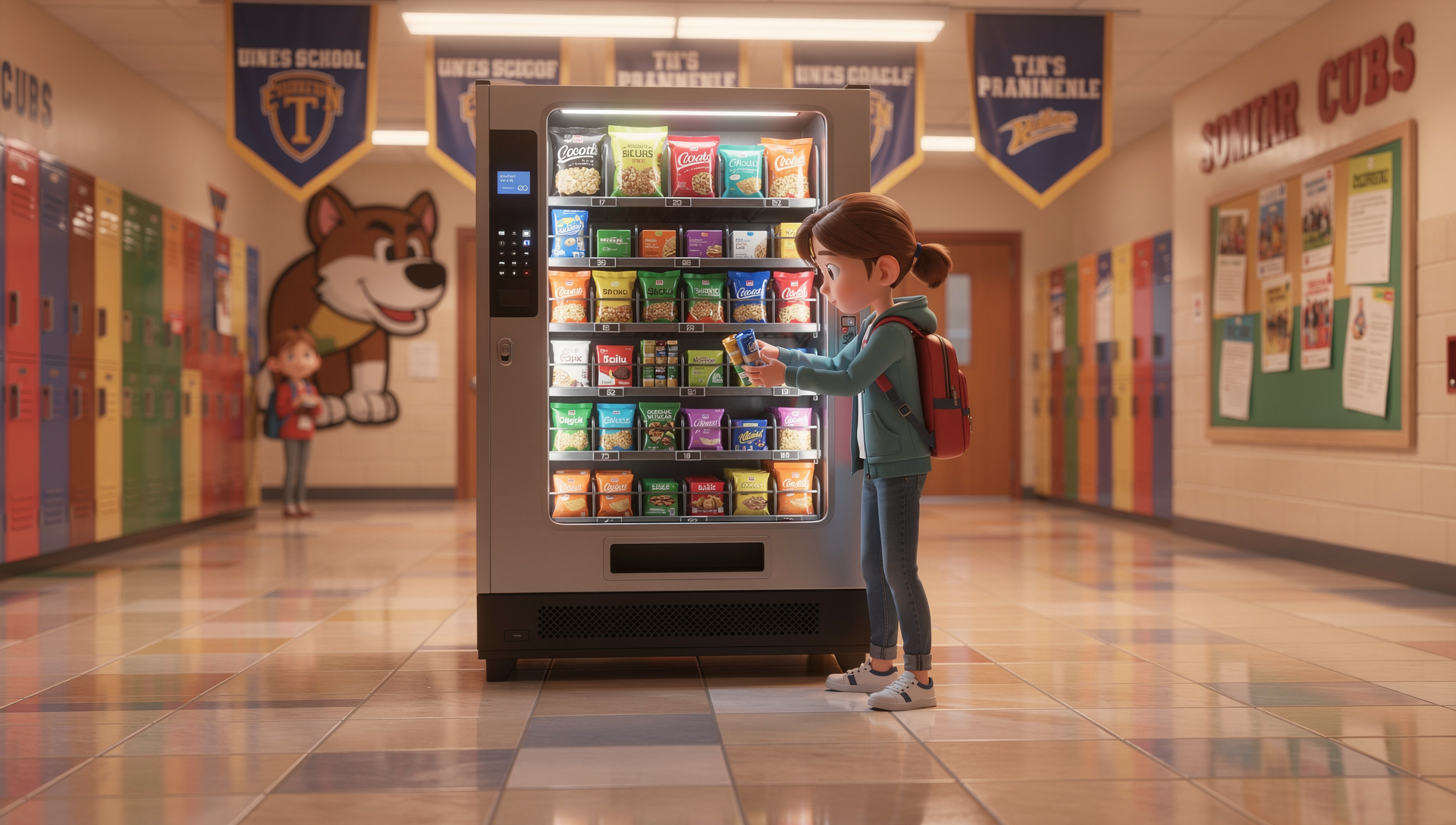
Most adults are still trying to figure out budgeting, investing, profit margins, and saving because no one gave them real world practice early on. A vending machine changes that. It turns money from a theory into something they can see, touch, count, track, and grow.
I have seen firsthand how powerful vending can be, especially when used intentionally to teach entrepreneurship and financial literacy. This is not about turning your child into a business tycoon overnight. It is about giving them ownership, responsibility, and confidence.
Let’s walk through how this actually works in real life.
Why Vending Is Such a Powerful Teaching Tool
When most people think about kids starting businesses, they picture lemonade stands or mowing lawns. Those are great, but they are short term. A vending machine operates every day. It introduces the idea that income can be ongoing, but only if managed properly.
Here is what makes vending such a strong learning tool:
• It requires inventory management
• It requires tracking money
• It requires decision making
• It requires accountability
• It produces measurable results
Kids quickly realize something important. The money inside the machine is not automatically theirs. They have to subtract product cost. They have to restock. They have to think ahead.
That lesson alone is worth everything.
A Quick Story That Explains the Impact
A friend of mine helped his 12 year old son place a small snack machine in a local community center. The first week the machine made 120 dollars. His son was excited and immediately started planning what he was going to buy.
Then his dad sat him down and showed him the receipts.
The snacks cost 65 dollars. They agreed to set aside money for future inventory. Suddenly the 120 dollars was not 120 dollars anymore.
That moment changed everything.
Instead of spending, the kid started asking questions. Which snacks sell fastest. Can we find them cheaper. Should we raise prices by 25 cents.
That is entrepreneurship happening in real time.
Choosing the Right Vending Machine for Kids
You do not need a giant commercial machine to start teaching these lessons. In fact, smaller machines are often better.
Small Snack Machines
A compact snack machine is ideal for:
• Family owned businesses
• Churches
• Youth centers
• School staff rooms
• Community spaces
If you are looking for entry level snack machines, here are a few examples to research:
• Seaga SM2300 Combo Vending Machine
https://www.seagamfg.com/product/sm2300/
• Vending.com Wittern 3589 Combo
https://www.vending.com/products/3589-combo-vending-machine/
• A and M Equipment Snack Machines
https://www.aandmequipment.com
These types of machines are manageable and not overwhelming for kids to learn.

Using School Approved Products to Teach Responsibility
If the machine is going into a school environment, nutrition guidelines matter. That becomes part of the lesson.
Instead of loading it with candy, consider:
• Baked chips
• Granola bars
• Trail mix
• Bottled water
• 100 percent juice
You can review nutrition guidelines from resources like the USDA Smart Snacks standards:
https://www.fns.usda.gov/tn/guide-smart-snacks-school
Now your child is not just learning about profit. They are learning about regulations, compliance, and responsibility.
That is a powerful layer of education.
Teaching Revenue Versus Profit in a Way Kids Understand
This is where the real education happens.
Sit down with your child and lay out the numbers.
Let’s say they buy a box of snacks for 40 dollars. Each snack costs 50 cents. They sell each snack for 1 dollar.
Ask them how much profit they make per snack.
When they say 1 dollar, correct them gently.
No. The profit is 50 cents.
Then explain this. Revenue is the total money collected. Profit is what remains after expenses.
I promise you that lesson will stick far longer than anything in a textbook.
Creating a Simple Profit Plan
One of the best systems I have seen families use is a simple split:
• 50 percent reinvest back into inventory
• 25 percent into savings
• 15 percent spending
• 10 percent giving
You can adjust those numbers, but the structure matters.
It teaches delayed gratification. It teaches discipline. It teaches that business income has purpose.
A Story About Pricing Strategy
Another parent I spoke with shared this story.
Their daughter noticed that the fruit snacks were selling out quickly. Instead of just celebrating, her mom asked a simple question.
Why do you think they sell so fast.
After some thinking, the daughter realized they were the cheapest item in the machine.
They experimented by raising the price by 25 cents.
Sales barely changed.
That small change increased profit without increasing workload.
That is pricing strategy in action.
Teaching Inventory Management the Fun Way
Take your child to a warehouse store like:
• Costco
https://www.costco.com
• Sam’s Club
https://www.samsclub.com
Show them how bulk purchasing lowers cost per unit. Compare prices on your phone calculator.
Ask questions like:
If this box has 40 snacks for 20 dollars, what is the cost per snack.
When math has real consequences, kids pay attention.

Teaching Marketing Without Complicating It
Marketing does not have to be complicated.
You can teach simple concepts like:
• Eye level placement sells more
• Best sellers should be easy to see
• Ask customers what they want
Encourage your child to ask five customers what snack they wish was in the machine. That conversation builds communication skills and customer awareness.
Introducing Data and Tracking
Even basic machines can be tracked manually.
Have your child record:
• Weekly sales totals
• Top selling items
• Slow moving products
• Restock dates
Older kids can use a simple spreadsheet.
That is data driven decision making in its simplest form.
Turning One Machine Into a Growth Lesson
Once the first machine is paid off, ask this question.
Do we buy a second machine or do we keep taking profit.
Now you are teaching reinvestment and scaling.
Explain the concept of return on investment. If the machine cost 1000 dollars and makes 150 dollars per month, how long until it pays for itself.
Those conversations shape future investors.
What Schools Can Do With Vending Programs
Schools can use vending machines inside entrepreneurship clubs or financial literacy programs.
Students can divide into roles:
• Accounting
• Purchasing
• Marketing
• Operations
They can review sales data during meetings. They can propose product changes. They can present reports.
That mirrors real companies.

Handling Problems as Learning Moments
Machines jam. Products expire. Sales slow down.
Instead of fixing everything immediately, ask questions.
Why did sales drop this week.
Did we overstock one item.
Should we rotate products.
One slow week teaches resilience better than any lecture.
Safety and Supervision Always Come First
Keep it simple and safe.
• Always supervise
• Teach safe lifting
• Ensure proper electrical setup
• Keep machines in secure locations
• Check local regulations
The goal is education, not stress.
The Emotional Shift That Happens
The biggest transformation I see is confidence.
Kids walk differently when they are running something that belongs to them. When they count earnings and see growth, something clicks.
They realize they can create income. They do not have to wait for someone to give it to them.
That mindset is life changing.

Final Thoughts
Teaching kids entrepreneurship through vending is not about creating pressure. It is about creating opportunity.
A small snack machine can teach:
• Financial literacy
• Budgeting
• Pricing
• Marketing
• Responsibility
• Confidence
It is hands on. It is measurable. It is real.
If we want the next generation to understand money, ownership, and business, we have to give them real world practice.
A vending machine just happens to be one of the most practical classrooms available.


